
Cortex: Audit-Ready Data Architecture from Ingestion to Deployment
Centralized, Compliance-Native Data Ingestion
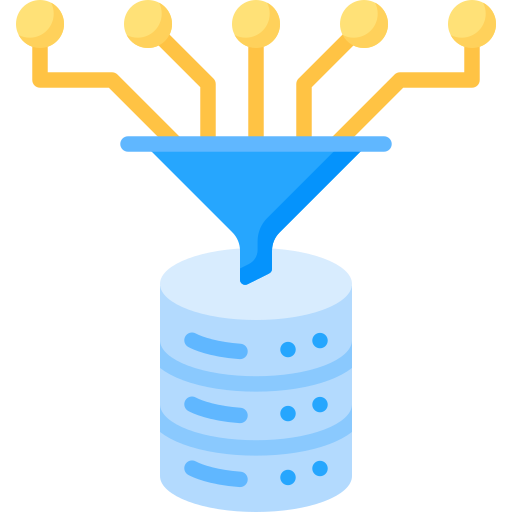
Every piece of data that enters Cortex is governed from day one. Rather than relying on messy, ad-hoc uploads, all files must pass through a formal ingestion pipeline:
Clear Provenance: Tracks the exact origin of the data, linking it to a named source (e.g., specific hospitals or scanners).
Explicit Legal & Privacy Controls: Mandates a definitive declaration of legal licenses, data types, and PII (Personally Identifiable Information) status.
Separation of Concerns: Features a strict lifecycle gated by a dedicated Compliance Lead. While researchers can immediately work with uploaded data, only approved batches can be used to train production-ready AI models.
Structured Datalake Data Integrity
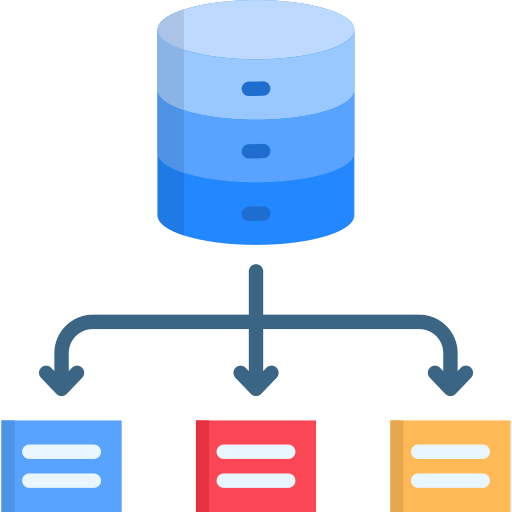
Cortex maintains an enterprise-grade repository for images and videos. It enforces absolute structural integrity to prevent the most common methodological errors in AI development:
Content-Hash Deduplication: Files are automatically deduplicated using SHA-256 content hashes, keeping training sets clean and preventing skewed validation metrics.
Metadata-Level Data Splitting: Add metadata to your files. This allows for partitioning across train, test, and validation splits, entirely eliminating accidental train/test leakage or data contamination.
Advanced Video Support: Natively transcodes uploaded videos to constant frame rates and uses AI-assisted strategies (like keyframe extraction and visual-diversity sampling) to convert raw video into annotatable image frames.
Data & Model Lineage
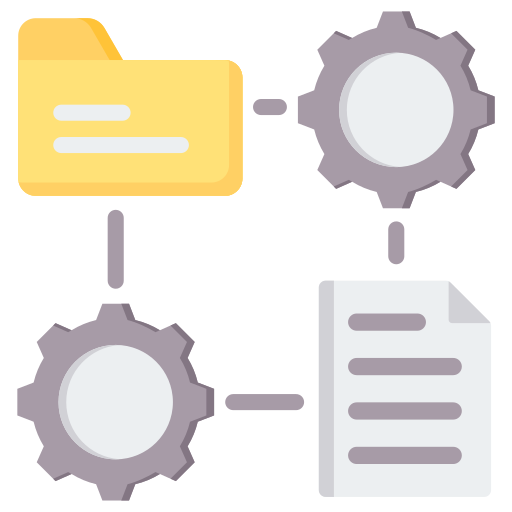
Cortex creates an unbroken, automated, and immutable chain of custody across your entire AI pipeline:
Cryptographic Dataset Snapshots: Generates a SHA-256 hashed archive of the exact dataset state at a specific point in time. This serves as an automated, tamper-evident "construction log" proving exactly which data your model was trained on.
Automated Model Cards: The moment an AI model is registered, the platform automatically generates structured documentation linking the model directly back to its parent datasets and project history.

Scientific-Grade Annotation
Unlike platforms that outsource labeling, Cortex features a built-in, custom annotation module tightly woven directly into its data governance layer.
Diverse Annotation Types: Supports pixel-perfect segmentation masks, bounding boxes, panoptic segmentation, point localization, and classification for images. It also supports complex video labeling, including temporal interval annotation and Multiple Object Tracking (MOT).
Rigorous Workflows: Built for scientific accuracy and speed. Teams can utilize advanced assignment strategies like Stratified Mode (balancing annotator combinations for optimal inter-rater reliability studies) or Fixed Mode (enforcing sequential progression to eliminate bias in user studies).
Immutable Label Traceability: Every annotation is inherently versioned and tracks who made it, when, and with what version of the software, providing a definitive, auditable line of ground-truth consensus.
Continuous Compliance
Cortex turns audit readiness into an automated byproduct of your everyday workflow. Our risk management infrastructure bridges the gap between risk identification and engineering execution with an end-to-end pipeline.
Closed-Loop Risk Management: Seamlessly link identified QMS, technical, or clinical hazards directly to specific system requirements, testing protocols, and mitigation datasets.
Automated Evidence Generation: Eliminate the weeks of manual retrospective spreadsheet compilation. Cortex dynamically updates your Traceability Matrix in real time as your data changes, your models retrain, and your mitigations are verified.
Audit-Ready Exporting: Generate tamper-evident compliance packages that instantly prove to regulators exactly how every identified hazard is actively mitigated, controlled, and tested across your AI lifecycle.

ISO 27001 & ISO 42001 Governed Enterprise Security

Cortex treats compliance as a core engineering requirement rather than a retrospective documentation exercise. Built from the ground up for highly regulated AI deployment, the platform serves as an organization’s single source of truth , maintaining an airtight, continuous compliance posture aligned with global security and AI management standards.
ISO 42001-Native AI Governance: Seamlessly fulfill Artificial Intelligence Management System (AIMS) requirements. Cortex automates ISO 42001 compliant data acquisition workflows , records explicit license and PII declarations , and automatically compiles per-model documentation via structured Model Cards.
Multi-Layered Access & Audit Security: Enforce strict, role-based access control (RBAC) across six bounded organizational roles alongside mandatory Multi-Factor Authentication (MFA). Sensitive endpoint calls are captured in a real-time Access Log, while a comprehensive History tracks every asset creation, update, and deletion across the system.
Regulatory-Compliant Data Lifecycle: Balance stringent data retention policies with clinical, industrial and commercial research needs. Cortex supports GDPR-compliant content deletion, enabling the permanent, irreversible removal of raw file bytes while cleanly preserving the database records, annotations, and audit histories required for regulatory validation.